

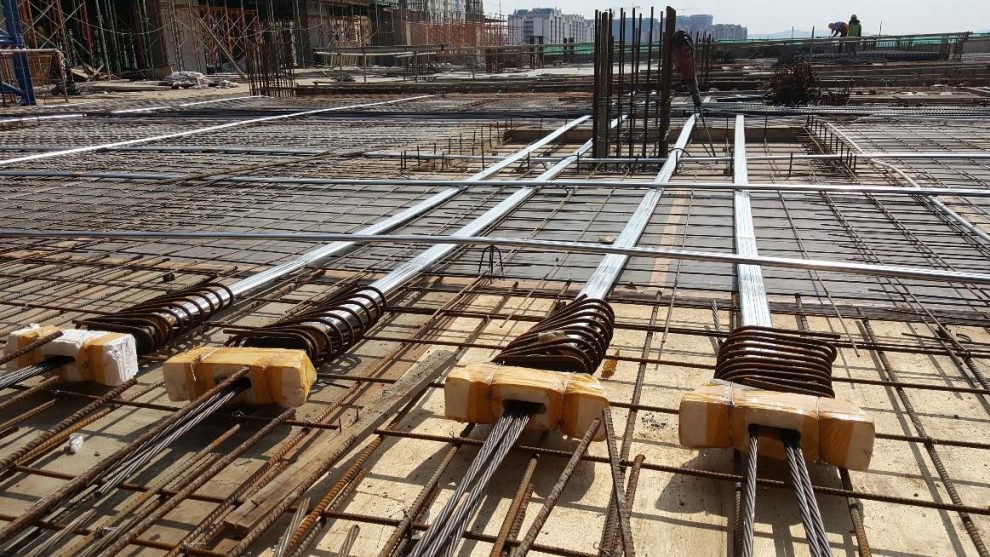
Pre-tensioning system vs Post-tensioning system
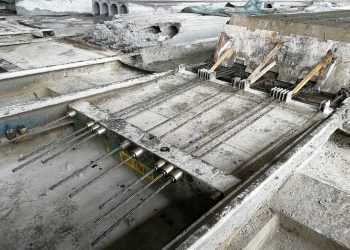
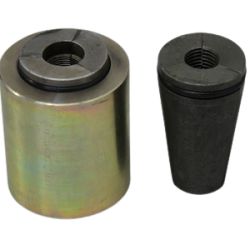
With Pre-Tensioning, the tendons are tensioned against the abutments before the concrete is place. Once the concrete is hardened, the tension force is released and cut off after getting the required strength of the concrete to transfer the pre-stress on the concrete member. The tendon tries to shrink back to the initial length but the concrete resists it through the bond between them, thus, compression force is induced in concrete. Pre-Tension is usually done with precast. Wedge and barrel are the two components required to hold the tendons or pre-tensioning wires tightly when it is pulled out for inducing tensile force. The barrel will have tampered finish into which the wedge will get locked as the force increased.
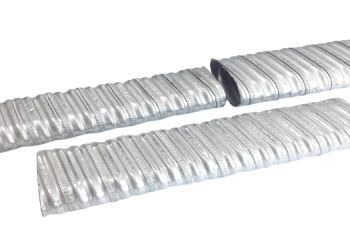
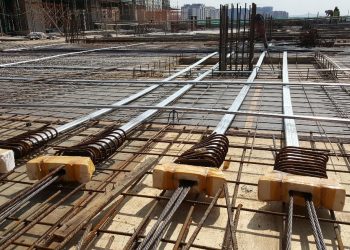
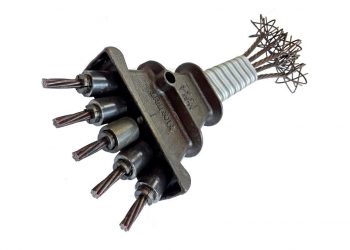
Post-tensioning is a technique for reinforcing concrete. With Post-Tensioning, the tendons are tensioned after the concrete has hardened. Commonly, corrugated ducts are placed inside the concrete along the centroidal axis before casting. After the concrete has hardened and had enough strength, the tendon was placed inside the duct, stressed, and anchored against concrete. Space remains in the duct is filled with mortar by grouting. Post-Tensioning can be done either as precast or cast-in-place.
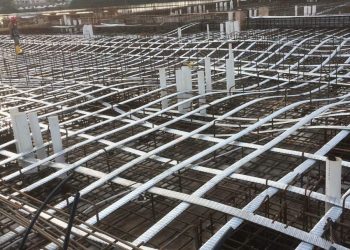
Post-tensioning vs Conventional
Post-tensioned concrete is stronger and more flexible than conventional steel-reinforced concrete. Post-tensioning helps reduce cracking from shrinkage as the concrete dries, and holds together any cracks that do form.
Summary
| Pre-Tensioning | Post-Tensioning |
| Pre-tensioning is done in the factories thus suitable for precast construction works. | Post-tensioning can be done in factories as well as on the site. |
| In this type of concrete, the pre-stressing cables called the strands are tensioned before casting the concrete and then concrete is cast enclosing the tensioned cables. | In this type of concrete, the strands are enclosed within a duct in the form and then concrete is cast. The process of tensioning the strands is carried out after the concrete attains its sufficient strength. |
| Small sections are to be constructed. | The size of a member is not restricted, long-span bridges are constructed by post-tensioning. |
| Pre-tensioning members are produced in a mould. | Cables are used in place of wires and jacks are used for stretching. |
| The concrete is prestressed with tendons before it is placing in position. | Prestressing is done after the concrete attains sufficient strength. |
| Pre-tensioning is preferred when the structural element is small and easy to transport. | Post-tensioning is preferred when the structural element is heavy. |